Kudos August 2026

Kudos is a monthly submissions-based roundup celebrating university faculty and staff—awards, honors, thought leadership, new arrivals, and more. Share your own great news or recognize a colleague at go.tufts.edu/kudos.

Abhishek Chatterjee, professor at the School of Medicine, was named fellow of the American Surgical Association, one of the highest honors in academic surgery.
Robert Cook, professor of psychology, was awarded the Comparative Cognition Society Research Award by the International Conference on Comparative Cognition. The award recognizes outstanding contributions to the study of cognitive processes in animals.
Jaye Gardiner, assistant professor of biology, and Allie Balter-Kennedy, assistant professor of Earth and climate studies, have both been named to Scientific American’s inaugural class of Young American Scientists. They are among 28 researchers “who are redefining the future of science.”
Krishna Kumar, Robinson Professor in Chemistry, has been recognized with the István Horváth Fluorous Technologies Award for major contributions to the field of fluorous chemistry. The award will be presented during the next meeting of the International Symposium on Fluorine Chemistry and International Symposium on Fluorous Technologies, which will be held in Strasbourg in 2027. Kumar will be a plenary speaker at the symposium.
Alan Solomont, dean emeritus of the Jonathan M. Tisch College of Civic Life and former ambassador to Spain and Andorra, was honored with the Royal Order of Isabel la Católica, Commander by Number—one of Spain’s highest orders of merit.
Alice Isabella Sullivan, associate professor of medieval art and architecture, has been elected to the board of directors of the Association Villard de Honnecourt for the Interdisciplinary Study of Medieval Technology, Science, and Art. Her term runs through 2029.
Howard Wolff, professor of the practice in film and media studies and associate dean emeritus of the School of Arts and Sciences, had his film Dust win Best Feature or Medium-Length Film at the 2026 Film Art X Film Festival, which is based in Vienna, Austria.
The Fletcher School signed a memorandum of understanding with Tsinghua University School of Public Policy and Management for bilateral academic collaboration.
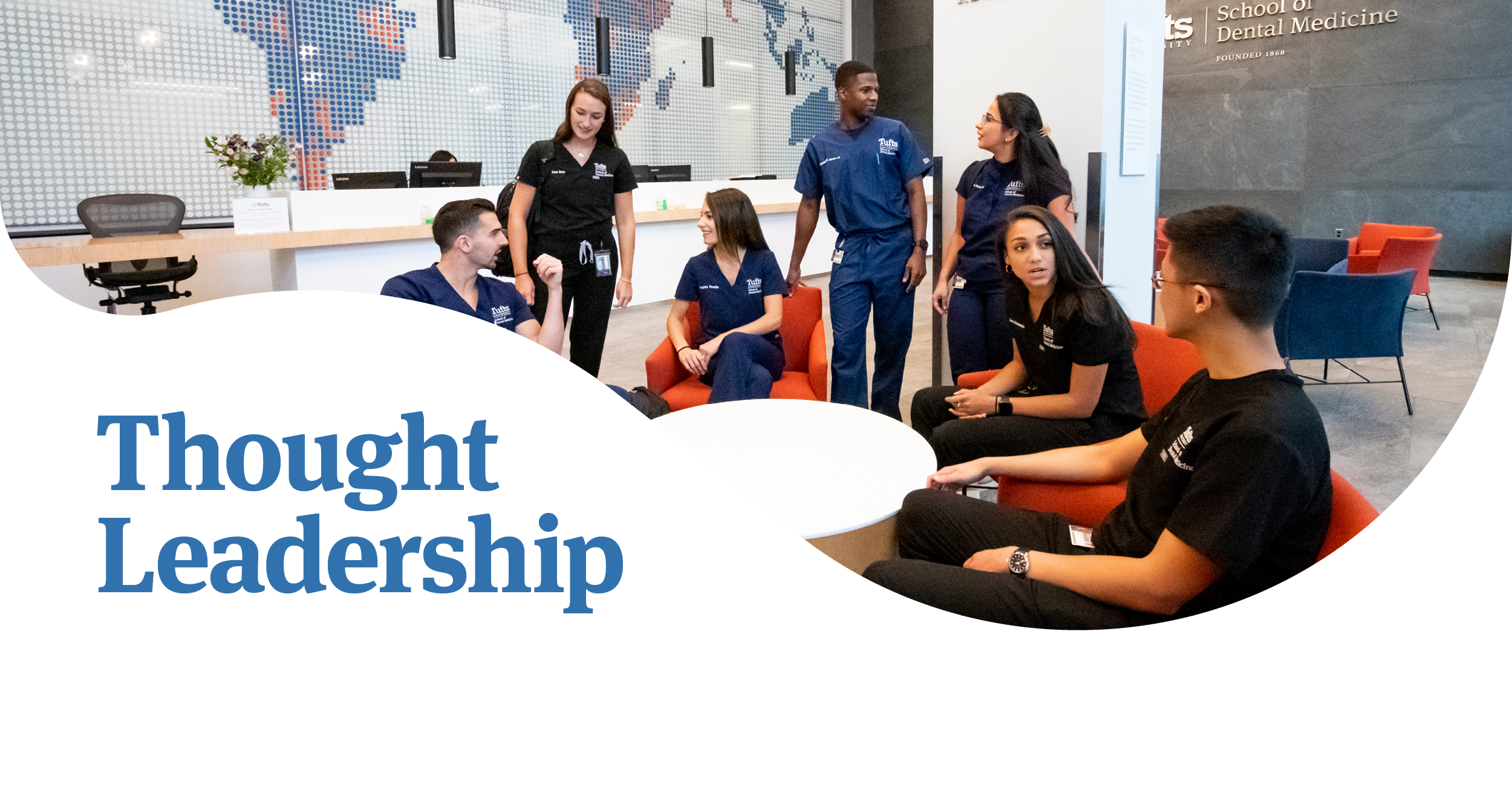
The School of Dental Medicine has been recognized as an American Dental Association Qualified Testing Site, joining a select network of institutions advancing innovation in oral health care through research, testing, and industry collaboration. Read more about this recognition on Tufts Now.
The Tufts University Medford grounds crew—the team that maintains the grounds and fields, supports events, responds to storms, and does many other tasks that keep campus running smoothly—are the first recipients of the President’s Award, for their service to Tufts.
Kwasi Ampene, professor and chair of the Department of Music, was invited to present a keynote lecture for the First International Meeting on Black Ethnomusicology, held at the Federal University of Bahia-Salvador in Brazil. His keynote was entitled “Black Ethnomusicology: Sounds, Epistemologies, and African Legacy in the Studies of Music, Dance, and Dramatic Arts.”
Peter Gwynne, assistant professor at the School of Medicine, and Linden Hu, Paul and Elaine Chervinsky Professor of Immunology at the School of Medicine, are authors of a study that found biomarkers that may someday help clinicians better detect—and possibly cure—early and persistent Borrelia burgdorferi infections. The findings, published in the American Society for Microbiology journal Infection and Immunity, could lead to improved tests that identify Lyme disease earlier, when antibiotics can best prevent more debilitating disease. Read more about this study on Tufts Now.
Michele Jacob, professor of neuroscience, was an invited speaker at the fourth CTNNB1 Foundation conference in Barcelona, Spain, and was a keynote speaker at the second CTNNB1 Italia conference in Genoa, Italy. Her research is providing novel insights into pathophysiological changes and identifying a potential efficacious therapeutic drug candidate for the neurodevelopmental disorder CTNNB1 syndrome, which lacks approved treatments.
Elizabeth Rozanski, professor of small animal clinical sciences at Cummings School of Veterinary Medicine, and her then-graduate student Nichole Smith, MG17, wanted to find out if by talking with pet owners about second-hand smoke and animal health, veterinarians might influence human health for the better. Their study in the Journal of Shelter Medicine and Community Animal Health suggests it’s worth a try. Read more about the study on Tufts Now.
Sameer Sonkusale, Jon A. Levy School of Engineering Professor, and Matt Panzer, E Ink Professor of Engineering, have created thread-based electronics that conform to the body and could be used as softer, less obtrusive health monitors. The devices are described in the journal Applied Materials and Interfaces. Read more about this new technology on Tufts Now.
Phil Starks, associate professor of biology, and Caitlin Ball, A22, AG23, authored a study on how hermit crabs appear to regulate growth by changing how efficiently they use the food they consume. The findings, published in Invertebrate Biology, point to a broader principle in biology: Growth isn’t controlled only by how much an animal eats, but also by how efficiently it turns food into body mass. Read more about the study on Tufts Now.
Timothy Stephens, clinical instructor in family medicine, along with local colleagues in the research team he leads in Haikou, China, authored “Evaluation of a sleep sound analysis smartphone app for home obstructive sleep apnea screening among community-dwelling Chinese adults with hypertension,” which was recently published in the journal Sleep and Breathing.
Miriam Talaat, small animal veterinary surgeon and assistant clinical professor at Cummings School of Veterinary Medicine, participated in Harvard Medical School’s Training to Teach in Medicine program. Her capstone project addressed a common challenge faced by veterinary students: the transition from undergraduate education into the fast-paced, high-volume learning environment of veterinary school. Talaat proposed creating a structured course to teach students evidence-based study skills at Cummings School. She developed and implemented a five-module course delivered during orientation and the first semester for incoming students. The initiative was well-received and has since become a permanent part of orientation.
Silvana Varela Benavides, M29, participated in the Galen V. Henderson, M.D. Program, sponsored by New England Donor Services, the federally designated Organ Procurement Organization responsible for the recovery of organs and tissues for transplant in the New England region. The program was an eight-week immersive experience developed for medical students of diverse backgrounds to learn about organ and tissue donation and transplantation.
Daniel Votipka, Lin Family Assistant Professor in the Department of Computer Science, is leading research efforts to understand and inform cybersecurity protocols in clinical settings, medical devices, systems, and software. Read more about these efforts on the School of Engineering website.
Meng Wang, research assistant professor at the Gerald J. and Dorothy R. Friedman School of Nutrition Science and Policy, and Dariush Mozaffarian, director of the Food is Medicine Institute at the Friedman School of Nutrition Science and Policy, along with other Friedman School researchers, authored a study in Current Atherosclerosis Reports that pulls together the best available evidence on how non-nutritive sweeteners affect health. Read more about this study on Tufts Now.
The Center for Optical Characterization of Organic and Natural Materials, an offshoot of the Tufts Silklab, is now available as a resource for academic and industry clients. What sets it apart is not any single instrument, but a coordinated suite of microscopes that work together so that findings at one scale can be directly connected to findings at another, on the same sample, in the same session. Read more about the work of this new center on Tufts Now.
Cummings School of Veterinary Medicine is participating as the local partner in the Test of Rapamycin in Aging Dogs (TRIAD) clinical trial, recently featured on 60 Minutes. TRIAD is actively recruiting older, larger dogs to participate. To learn more and for eligibility details, visit TRIAD’s website.
A team from Cummings School of Veterinary Medicine helped staff the K9 aid station at Boston Stadium on June 16 during the FIFA game between Norway and Iraq. Esther Cuyjet, graduate student, Jewlyssa Pedregon, V28, and Sean Majoy, director of the McLaughlin Center for Operational K9s at Cummings School were among those lending a hand.
School of Medicine researchers identified critical childhood nutrition gaps in analysis of 185 countries, with a key shift seen in the United States. In the study, published in BMJ Global Health, researchers analyzed dietary data from the Global Dietary Database, a large comprehensive compilation of what people around the world eat and drink. Read more about the study on Tufts Now.
A team of researchers from Tufts University’s Silklab, Helmholtz Munich, Ludwig Maximilian University Munich, and the Technical University of Munich, have developed a noninvasive way to monitor babies’ health—a featherlight, silk-based sticker, smaller than a coin, that quietly reads four critical health signals at once just by changing color. The work, published in ACS Sensors, describes a wearable patch that captures temperature, pH, sodium, and glucose from the wisps of fluid that pass naturally through a baby’s still-developing skin. Read more about this innovation on Tufts Now.

Lily Siddall was promoted to the director of rowing.